Nigeria's heat puts real pressure on commercial buildings, and the air conditioning system a business relies on often decides how well that space actually functions. Offices, retail stores, hotels, warehouses - all of them need cooling that holds up through long hours of use without driving operating costs out of control.
For many commercial properties, a rooftop package unit is the most practical answer. A Rooftop Package in Abuja houses the major air conditioning components in a single outdoor unit, which suits businesses that need to protect indoor floor space, keep maintenance access simple, and cool large areas efficiently.
At Pygar Group, we start by understanding what a building actually needs before recommending equipment. Design, layout, and how a space gets used all shape which cooling solution makes sense for a given business.
What Is a Rooftop Package Unit?
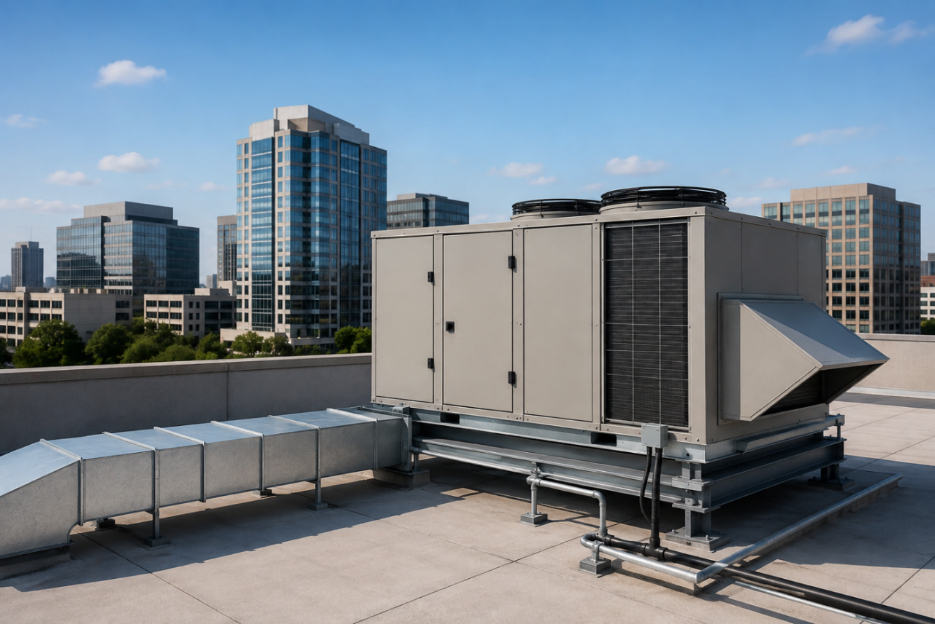
A rooftop package unit is a self-contained HVAC system installed on a building's roof. Unlike split systems, which spread components across different locations, a package unit combines the compressor, condenser, evaporator, and air handler into one machine.
Conditioned air travels from this rooftop unit into the building through ductwork, cooling a large area from a single source, with nearly all the equipment sitting outside where it doesn't compete for indoor space.
Why Rooftop Package Units Suit Commercial Buildings
The most immediate benefit is floor space. Indoor square footage is meant for staff, customers, and inventory, not compressors and air handlers, and keeping that equipment on the roof entirely is what makes rooftop units a natural fit for offices, shopping centers, and restaurants that can't spare the room for bulky hardware.
Centralized cooling matters just as much. One correctly sized package unit, tied into a well-designed duct run, can bring an entire building to a consistent temperature from a single point - a cleaner setup than running several standalone units room by room, especially in open-plan offices or buildings with many connected spaces.
Maintenance gets simpler too, though not effortless. Because the compressor, coils, fans, and refrigerant components all live in one place, a technician doesn't have to chase parts of the system across a building; filters, wiring, and coils are all reachable from the same rooftop access point. Catching a worn part there early is a lot cheaper than dealing with a breakdown later.
Noise is the other consideration. Nobody wants a compressor running next to a desk, a hotel bed, or an exam room, and putting that equipment on the roof handles it without added soundproofing.
There's a footprint benefit too, easy to overlook until you're looking at the building from outside: with the main hardware out of sight, the exterior and grounds stay cleaner, and there's more flexibility for whatever else needs that ground-level space.
Pair a rooftop unit with modern HVAC controls and zoning, and a business can scale cooling to actual occupancy instead of running everything at full output around the clock. That's usually where a properly sized system starts paying for itself in lower energy costs.
What to Consider Before Installation
Choosing the right rooftop package unit goes beyond team size or square footage. Several factors shape the best fit for a given building:
- Cooling load for the space
- Building design and insulation
- Expected occupancy
- Sun exposure and heat gain
- Ductwork layout
- Electrical capacity
- Roof structure and condition
- Ongoing maintenance needs
- How the building operates day to day
Sizing matters more than anything else on that list. A unit that's too small struggles during peak hours; one that's too large cycles on and off more than it should, which drives up energy costs and wears down components faster. If you're planning a new installation or weighing an upgrade, get these factors assessed before committing to a unit.
Why Professional Installation Matters
A rooftop package system only performs as well as its installation. Undersized ductwork, inadequate electrical work, or poor placement on the roof will raise operating costs and shorten the system's working life, no matter how capable the unit itself is on paper.
At Pygar Group, professional installation means planning around the specific challenges each building presents, so the equipment and the space work together instead of against each other. You can find more on our approach and services on our website.
Choosing the Right Rooftop Package Unit for Your Building
Rooftop package units remain a common choice for commercial HVAC projects because of what they offer together: centralized cooling, efficient use of indoor space, straightforward access for installation and servicing, and cost savings over the life of the system. For businesses in Abuja planning a new HVAC installation, they're worth serious consideration.
The right unit for your building depends on cooling load, construction, available roof space, and how the building actually operates. Contact us to discuss your HVAC needs and get a recommendation suited to your building.
Frequently Asked Questions
What are rooftop package units used for?
Central HVAC service for large and midsize commercial buildings - the unit sits on the roof and delivers conditioned air to indoor spaces through ductwork.
Can I use a rooftop unit for my office?
Yes. The main equipment stays outside occupied space, and ductwork carries the cooling wherever it's needed, which works for most office layouts and sizes.
How much maintenance should I plan for?
Regular upkeep is non-negotiable for reliable operation. That means cleaning filters and coils, checking and replacing fans as needed, and inspecting the electrical components on a set schedule rather than waiting for something to fail.
How do I choose the right rooftop package unit?
It comes down to your building's size, occupancy, insulation, heat gain, ductwork, operating hours, and cooling load - have an HVAC professional assess the building before you settle on a system.