Commercial buildings, retail stores, offices, hospitals, hotels, and industrial facilities all feel the cost of running energy-intensive equipment, and cooling is usually the biggest line item on that list, especially anywhere air conditioning runs for most of the year. Getting the cooling system right is one of the more direct ways a facility can control its operating costs.
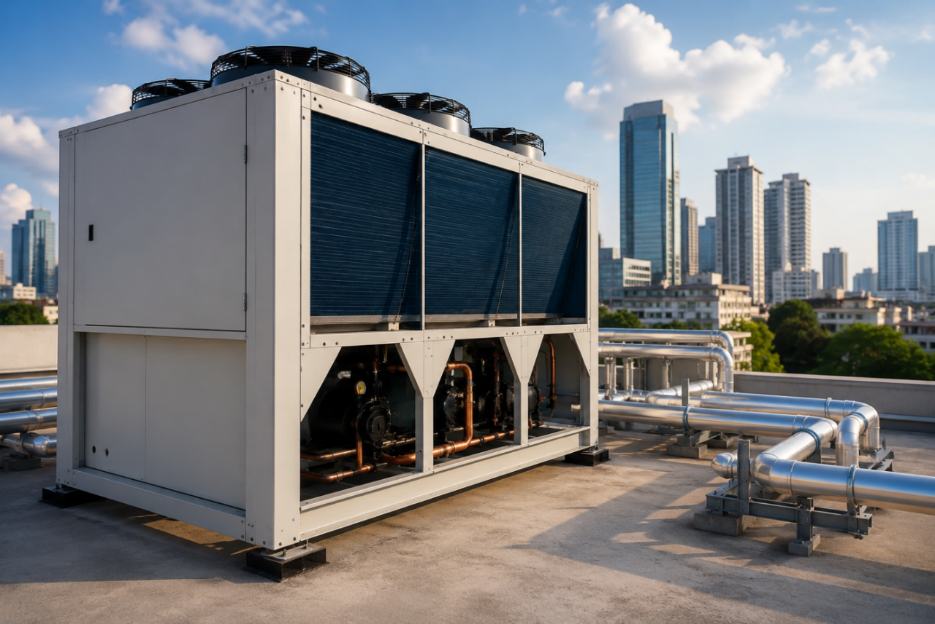
Air Cooled Chillers in Lagos offer a reliable, balanced way to do that with more control over energy spend. Instead of relying on a cooling tower, discharge water, and the equipment that goes with it, an air-cooled chiller rejects heat straight into the air - which means no cooling tower, no water pumps, and no related upkeep.
The team at Pygar Group works with businesses to understand their cooling requirements and match a solution to the building's size and energy goals.
Why Chiller Energy Efficiency Matters
A chiller does more than cool air - it removes heat from a building, and the wrong equipment for that job means higher energy bills through inefficiency alone. A well-matched commercial chiller delivers the cooling capacity a building actually needs while using as little energy as possible to get there.
Several other factors shape how much energy a system uses:
- The condition of the equipment
- Building size
- The building's heat load
- Operating hours
- Outdoor temperatures
- Chiller capacity
- How well the equipment is maintained
- Control systems
- Air distribution
- Insulation
Together, these factors give facility managers a clearer picture of where a properly adjusted heating and cooling system can actually save energy.
Why Air Cooled Chillers Use Less Energy
Removing the cooling tower removes a lot of the cost and hassle that comes with it. An air cooled chiller rejects heat through condenser coils and fans instead, which cuts the electricity that would otherwise go to cooling tower pumps and fans - and with no cooling tower, there's no water treatment to manage either. That's a real advantage for anyone looking for a more straightforward HVAC setup.
Most commercial buildings don't need full cooling capacity around the clock. Chillers can be controlled to run at only the capacity actually needed at a given time, which avoids wasting energy and reduces the supporting equipment the system needs to run.
Fewer supporting components also means less to maintain. An air cooled system typically comes down to condenser coils, fans, filters, and connections, fewer parts that depend on other systems, which makes routine checks and part replacement more straightforward.
Keeping a system clean matters more than it might seem. Dirt on the coils, blocked air paths, and worn motors are common sources of energy loss, and regular maintenance, clean coils and filters, motors and connections checked on schedule — is what keeps a chiller performing the way it was sized to.
Choosing the Right Chiller for a Building
The highest-capacity chiller isn't automatically the best choice. An oversized unit cycles on and off more than it should, which raises energy costs and wears down components; an undersized one can't keep up with demand, which also drives energy costs up.
A proper assessment looks at how the building is occupied and when, what equipment is already installed, the estimated cooling load, the space available for installation, and where the building's cooling needs are headed. Our chiller options for Nigeria cover how different systems apply to commercial and industrial buildings, if you want to compare options.
Improving Chiller Energy Performance
Buying an efficient chiller is only part of the equation, day-to-day operating and maintenance practices matter just as much. Worth building into a routine:
- Balancing occupant comfort against excessive cooling
- Preventive maintenance on a regular schedule
- Monitoring electricity consumption
- Inspecting ductwork and insulation for lost conditioned air
- Building controls that match cooling output to occupancy
Equipment that's properly maintained and efficiently run is what actually delivers on a building's energy performance goals over time.
Matching the Chiller to the Building
Cooling needs vary a lot by building type - a chiller that works well for an office isn't necessarily right for a hotel, hospital, factory, or retail space. At Pygar Group, we size each recommendation to the specific application, which gives the customer dependable temperature control at a reasonable operating cost over the years the system is in use.
Air cooled chillers suit commercial users with large cooling requirements particularly well: they use less water than traditional cooling equipment and typically cost less to run, which matters for any facility trying to keep a handle on electricity costs. Our engineers can help assess your cooling requirements and choose a chiller suited to your facility, contact us to get started.
Frequently Asked Questions
Can air cooled chillers be used in commercial buildings?
Yes - offices, hotels, retail buildings, and healthcare facilities are among the common settings where reliable chilled-water cooling is needed.
Do air cooled chillers use less water?
Yes. Without a cooling tower, an air cooled chiller uses only a fraction of the water a water-cooled system would need.
How often do air cooled chillers need maintenance?
That depends on how the unit is used and the environment it operates in. Manufacturer-recommended intervals, combined with actual site conditions, are the best guide.
Can a chiller lower a building's energy consumption?
A correctly sized, efficiently operated chiller can reduce energy use, though the actual savings depend on the building, its cooling requirements, how it's operated, the efficiency of other building systems, and how well the chiller is maintained.