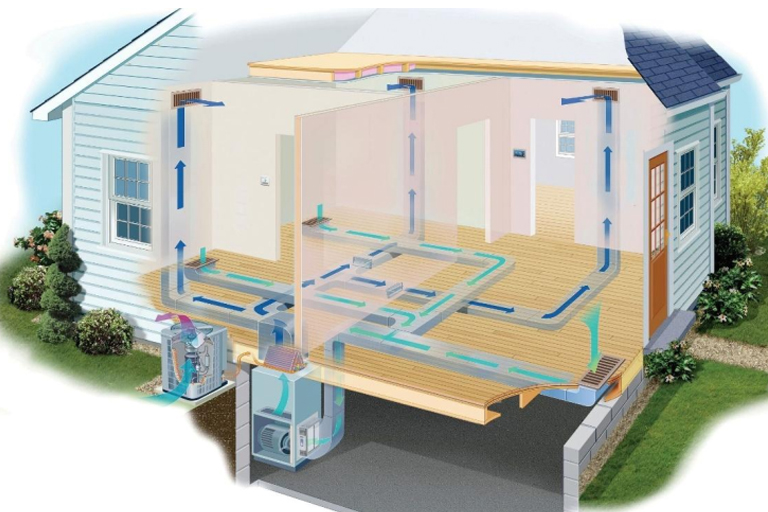
Lagos is hot and humid for most of the year, and buildings feel it. Offices get stuffy by midday, shops lose customers to the heat, and warehouses struggle to protect stock. A well-planned HVAC system keeps indoor spaces cool, dry and breathable, but only if it’s chosen and installed properly.
Before you commit to HVAC installation in Lagos, it helps to know what these systems actually do, which type suits your building and what will affect running costs once the system is in. This guide covers each of those points.
What Is an HVAC System?
HVAC is short for heating, ventilation and air conditioning. In reality, however, it is the equipment which controls the temperature, humidity and air quality of the interior of a building. It delivers fresh air, expels used air and maintains the interior of a building at a predetermined temperature.
In Lagos, the need for heating is negligible. Air cooling and humidity regulation as well as air ventilation are essential. The latter prevents the interior from being stuffy and humid.
Why Does HVAC Make Sense for Lagos Buildings?
People tend to confuse HVAC with air conditioning systems. An air conditioner is responsible only for air cooling, while HVAC not only removes moisture and dust from the air but also helps to regulate humidity level, which means there will be no mold growth and unpleasant smells.
From business perspective, it is not only about comfort. Employees feel more comfortable working in a ventilated and cooled office, customers linger longer in cooled stores and heat sensitive machines as well as goods stored in warehouses are better preserved.
Checks to Be Done Prior to Installation of HVAC System in Lagos
The choice made before installation defines the performance of the system, maintenance cost and efficiency.
How big is the space, and who uses it? Capacity has to match the building. Too small, and the system runs nonstop without ever catching up. Too large, and you pay for power you don’t need. Floor area is the starting point, but headcount and heat-producing equipment count too.
Power is the next question, and in Lagos it’s a big one. Grid supply can drop without warning, so ask how the system will run on your generator or inverter, how much load it adds and how it restarts when power returns. A stabiliser helps protect the compressor.
Then think about what the building is for. A sitting room just needs to feel comfortable. A server room or a store full of perishable goods may need tighter temperature control and more capacity.
Don’t overlook access, either. Heat and dust wear HVAC equipment down, and Lagos has plenty of both. If technicians can’t easily reach the filters and outdoor units, servicing gets put off and small faults grow.
Finally, look past the price tag. A cheap unit that draws more power or fails early can end up costing more than a better one, so compare running and repair costs before you buy.
Common Types of HVAC Systems
The right type depends on the size, layout and purpose of the building. These are the options you’ll most often come across in Lagos:
- Split units: suited to homes and small offices
- Central air systems: for larger buildings with many rooms
- Packaged units: common in commercial spaces where indoor room for equipment is limited
- Ventilation-only systems: useful where moving air matters more than cooling it
No single type is best across the board. A good installer will recommend one after looking at how the space is actually used.
HVAC vs Cold Rooms: Where They Overlap
The refrigeration process used by HVAC and cold rooms is alike; however, their purpose differs. HVAC cools the area to make it comfortable for people to use. The cold room keeps the food products, medicines, or any other stuff stored inside at a particular temperature.
Many businesses require both: restaurants having a place for eating and storing the products in the cold store or distributors with office space alongside their storage space. Having a single company providing both services saves effort in planning.
Pygar Group designs and supplies cooling for both purposes. Alongside HVAC work, we operate as a Cold Room Supplier in Abuja and support businesses across Nigeria, including in Lagos.
HVAC Maintenance Tips
Installation is only one aspect of the work. There is much dust in Lagos, hence you will need to clean the filter periodically or replace it. Make sure that you book professional maintenance after some weeks and not when something goes wrong.
In between, check out if there are any strange sounds from the unit and also look out for reduced air flow, which means that your unit is in trouble. It would help if you did not overload the unit with too much work especially during the hot afternoon hours.
All these practices will ensure that your unit works effectively and lasts long.
Planning Your HVAC Installation in Lagos
A good HVAC system in Lagos starts with planning, not a product catalogue. Get the size, power setup, building use, maintenance access and running costs right, and the system should serve you well for years.
If you’re planning an HVAC or cold room project, talk to the Pygar Group team. We’ll look at your space and budget and help you choose a cooling setup that fits both.
Frequently Asked Questions
What size HVAC system do I need?
There’s no standard answer. It depends on floor area, how many people use the space and how much equipment is giving off heat. Have it assessed properly; guesswork usually ends with a system that’s too small or too big.
Will an HVAC system cope with power cuts in Lagos?
It can, if you pick the right unit. Go for one with a stabiliser, or one that runs smoothly on an inverter or generator. That protects the compressor and lets the system restart safely after an outage.
How often does it need servicing?
Every three to four months suits most homes and offices in Lagos. Near a busy road or a construction site, where dust is heavier, you may need checks more often.
Can Pygar Group set up a cold room too?
Yes, we do both. Besides HVAC, we work as a cold room supplier in Abuja, setting up cold storage for food, pharmaceuticals and other temperature-sensitive goods.